
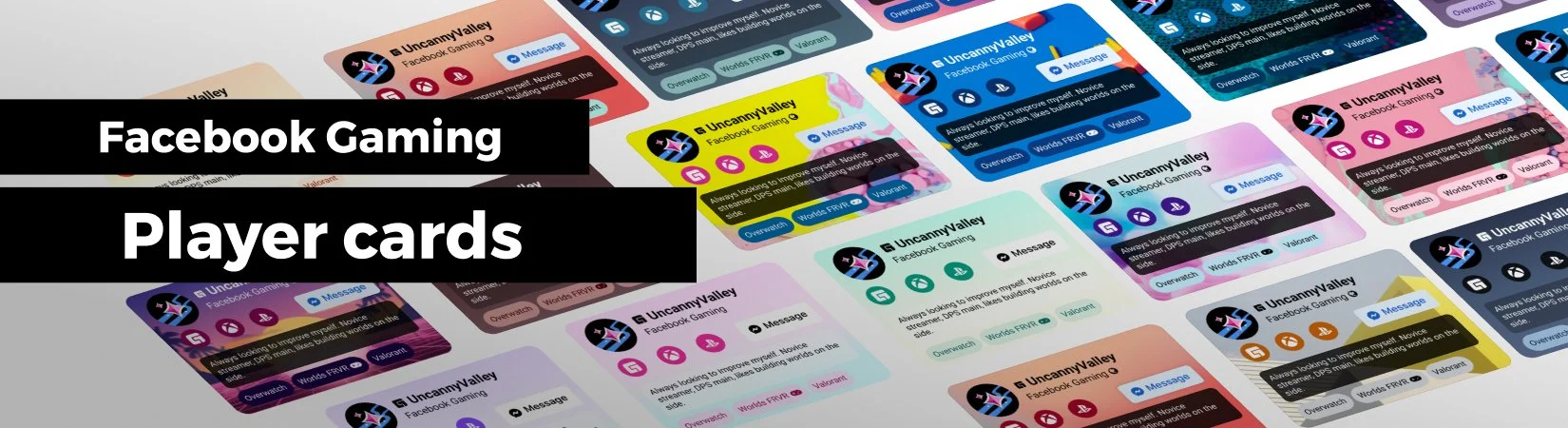
Description
Versatile, interactive Facebook-centralized mini-profiles that allowed users to express themselves and safely connect with others with similar interests.
Role
product design
product strategy
interaction/visual design
information architecture
project management
The challenge
Facebook’s gaming communities skew younger and more diverse than its usual demographic, with higher demands on the use of identity, privacy, and self-expression. While the communities themselves were thriving, Facebook’s broadcast model and real-name paradigm made it difficult for members to reach out and find other like-minded players.
A solution
After consulting the latest UX research on the player journey and my team on their priorities and bandwidth, I narrowed down 3 jobs to be done: 1) improve the social experience for our users in regards to their gaming interests, 2) cut down on the time needed to find and connect, 3) give users control of their identity and self-expression. Inspired from these, modern gaming tropes, and social media behaviors, I cam up with the idea of player cards.
Specs for the initial iteration of the card and creation form.
Privacy, context, safety
Player cards are shareable, customizable, interactive compact profiles that users could create and broadcast into the gaming space to find others who shared their various interests.
The real potential of the cards is in its contextual content. For example, cards shared outside of private groups display only their basic info, while cards shared between group members get additional context and interactivity, such as a direct message functionality and a way for friends to jump into on-platform game sessions.
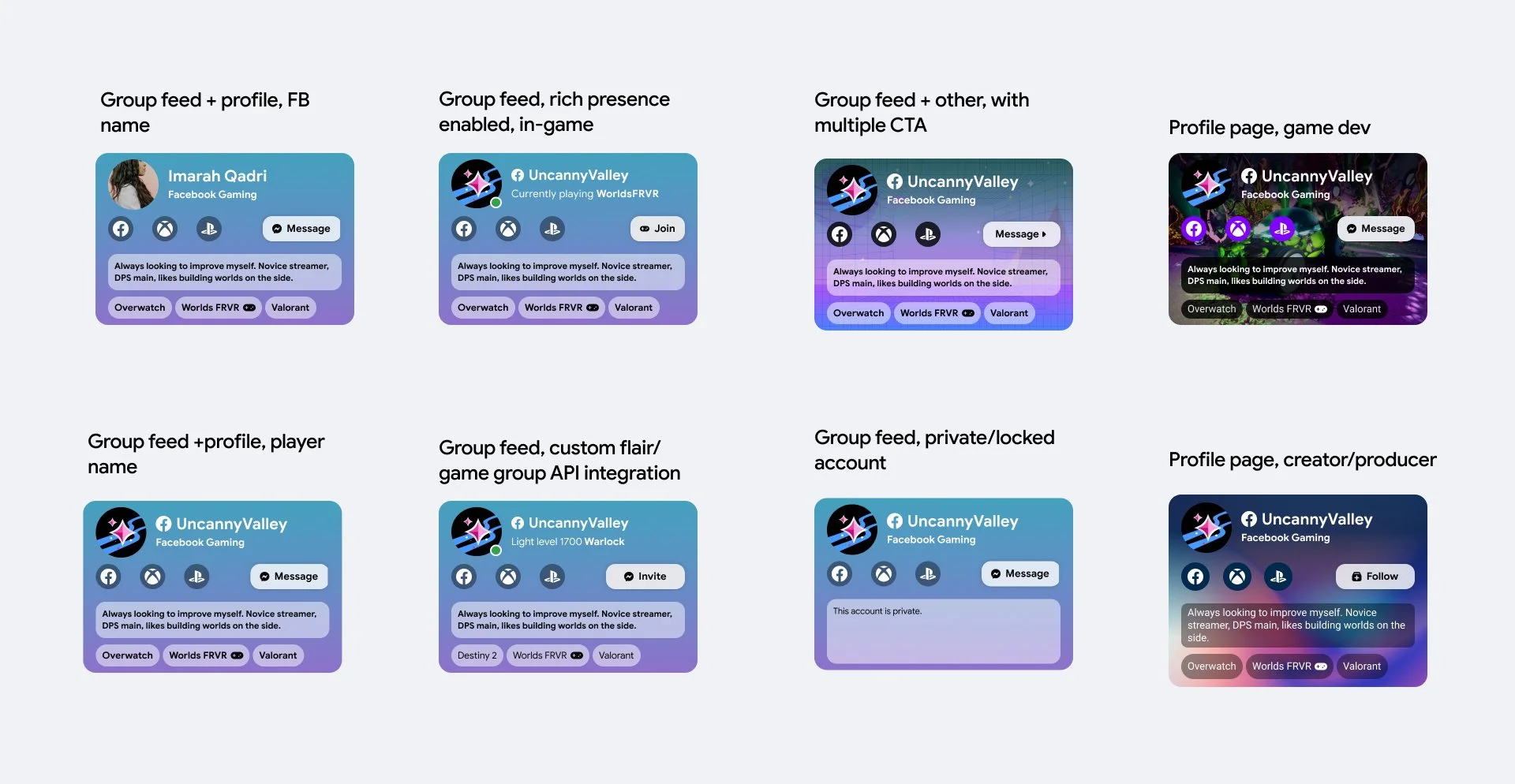
A design matrix of the card content and interaction changing depending on the card owner, privacy settings, and surface.
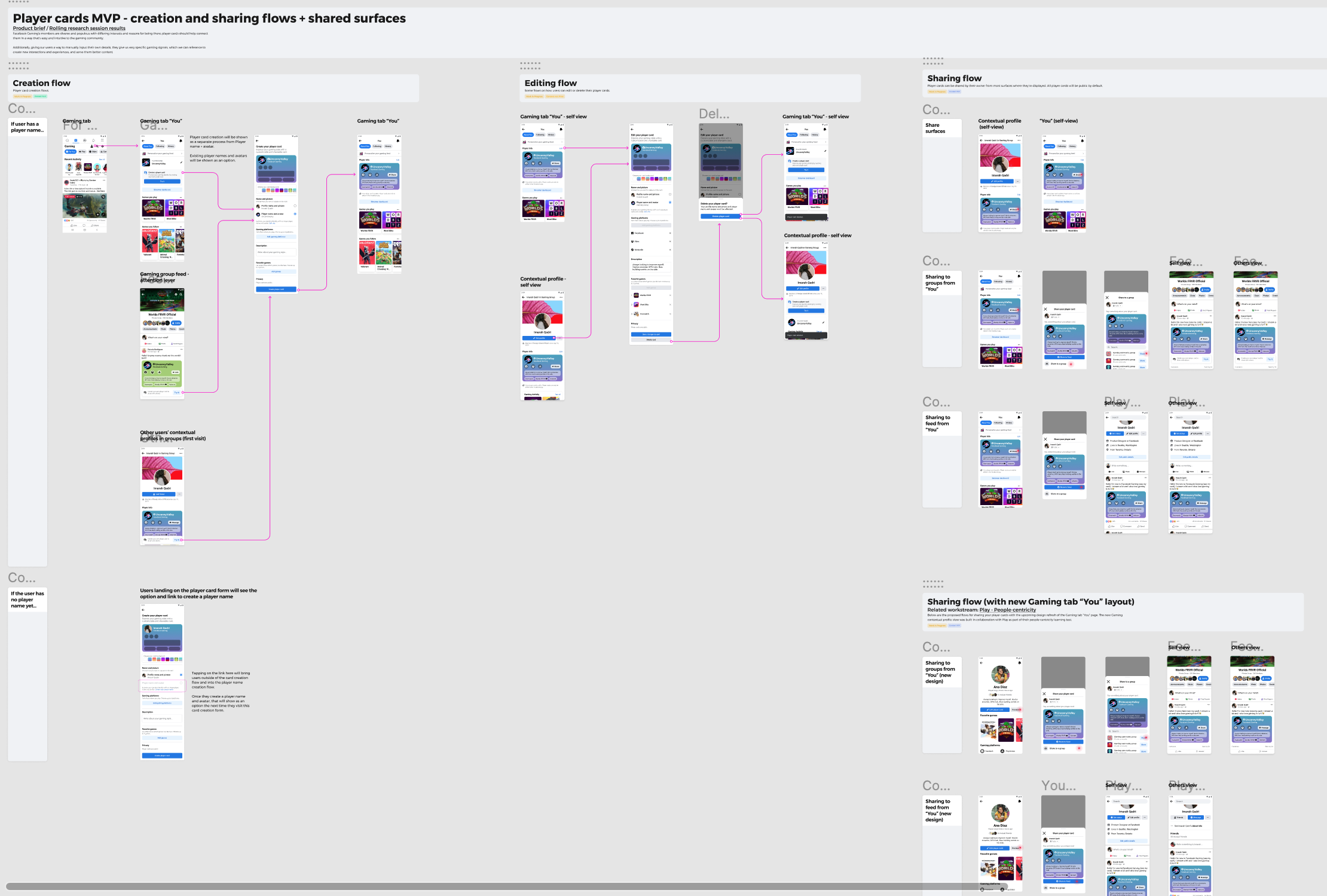
A section of the user flows for the player cards’ creation, editing, and sharing (MVP version) for review by the privacy team. Each review needed its own page with only the relevant interactions and screens.
A personal card to do the heavy lifting
It took several workshops before we all aligned on the MVP iteration and future versions, guided by our main goal of giving owners as much control as possible on how they displayed and shared their cards.
We created a huge design matrix that displayed almost 60 permutations of the cards. This included special variants for content creators and game devs that fans could follow, as well as versions that could be downloaded and shared within Messenger, and even outside of Facebook on other platforms.
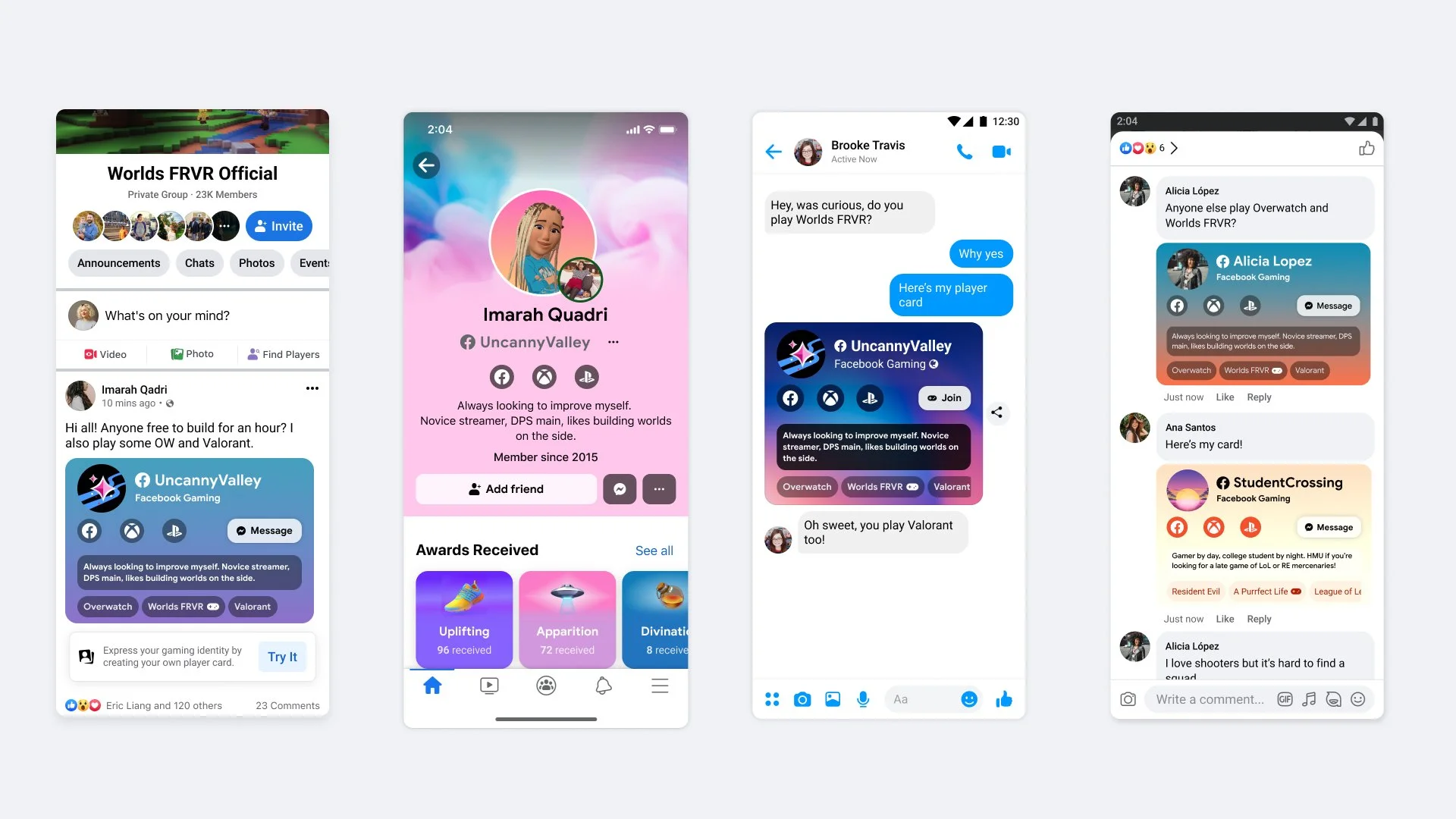
Examples of card use cases, ranging from simpler applications to those needing increased complexity and cross-functional collaborations with other teams like Messenger, Groups, Profiles, etc.
Impact, both external and internal, and the future
In mid-2022, Meta moved to file a design and utility patent for the idea, with myself, my content designer, and my engineer listed as co-inventors. As of this writing, the applications are pending (63/391,952) and will cover future use cases such as interactive versions that can be shared on Messenger and Facebook comments, and a VR version for Facebook’s Oculus online lobbies.
Though the Connect team that originally built the project was dissolved as a result of internal re-org, the work itself remains on its codebase as it awaits a reporting flow.
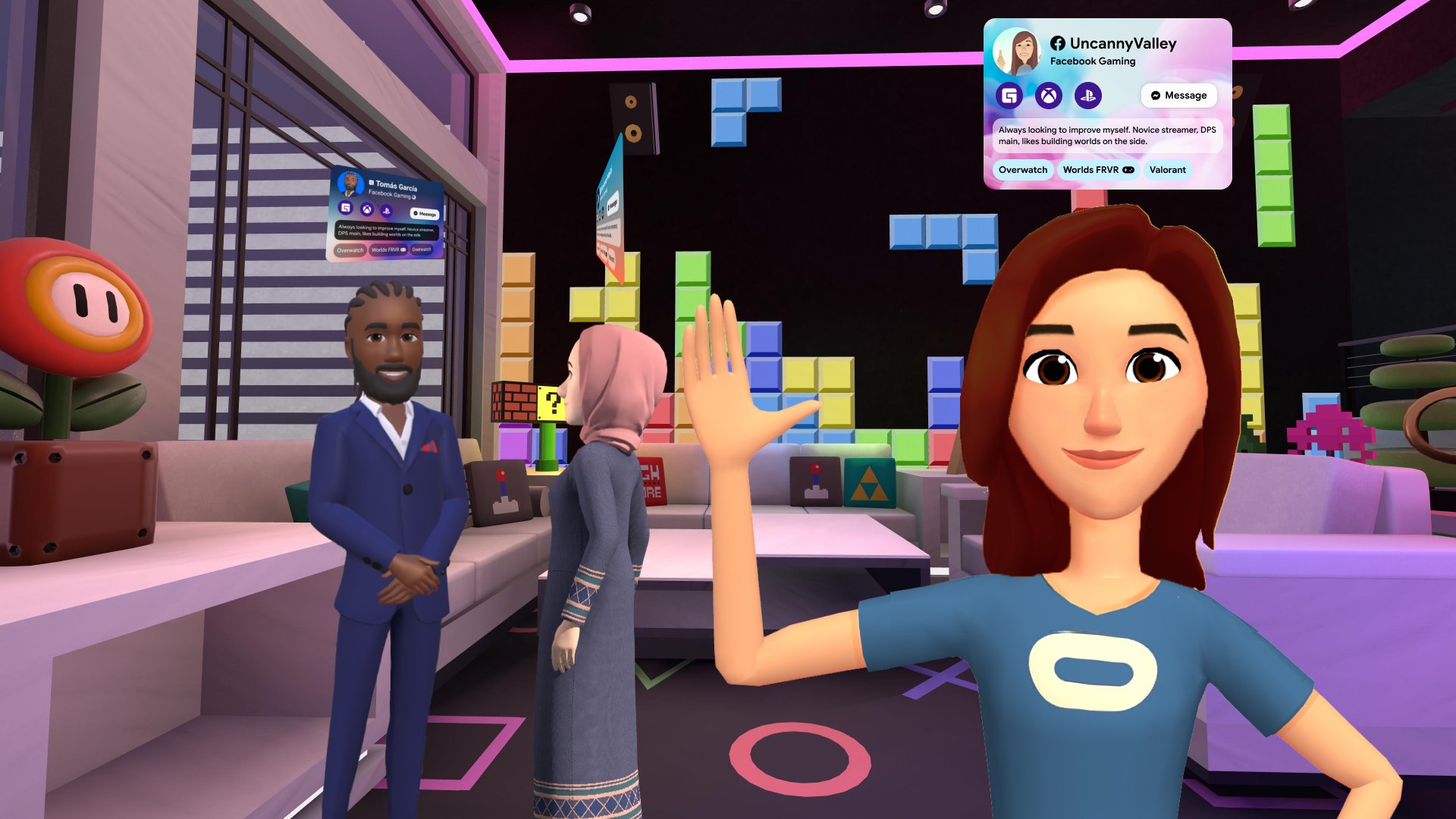
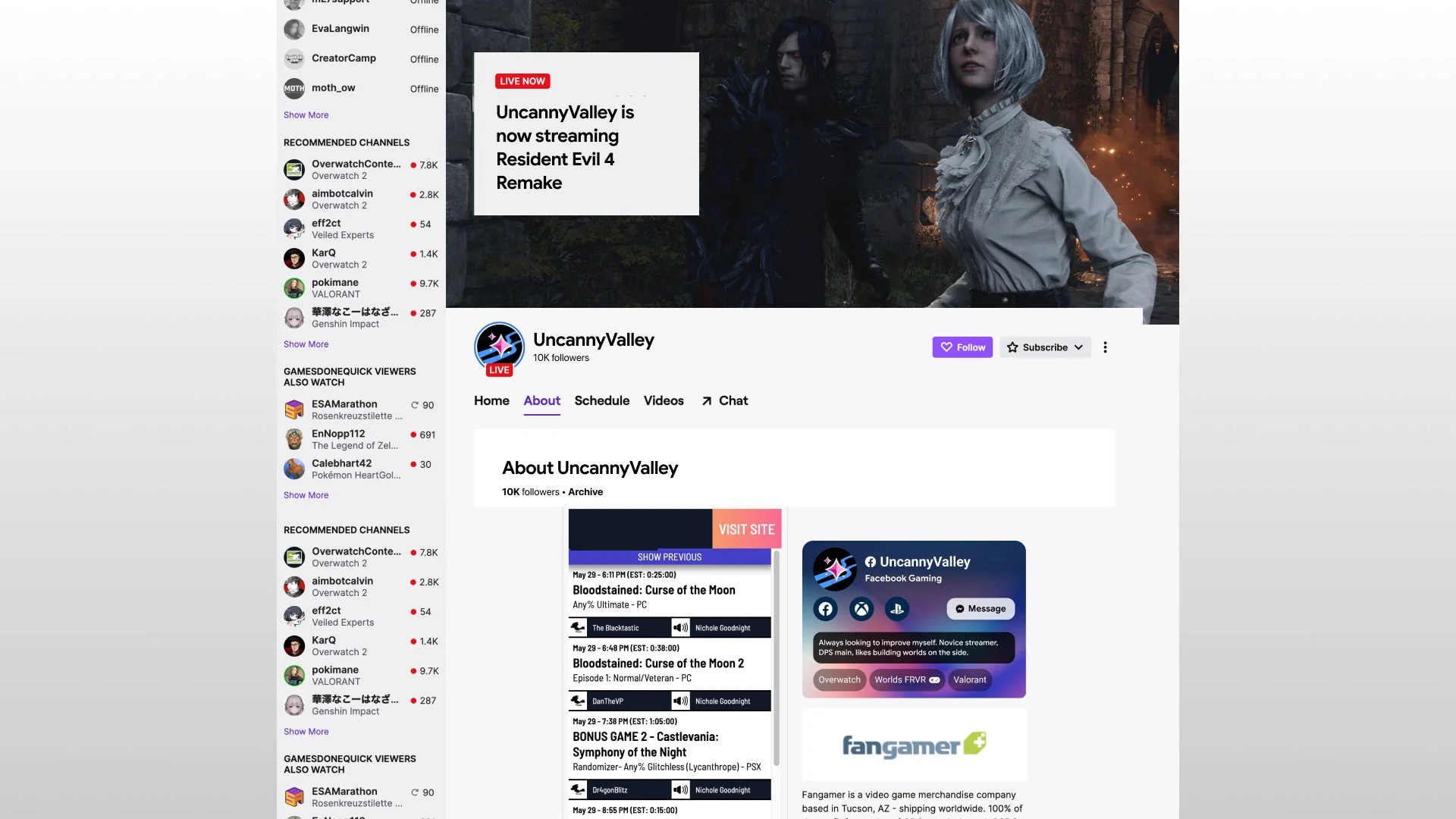
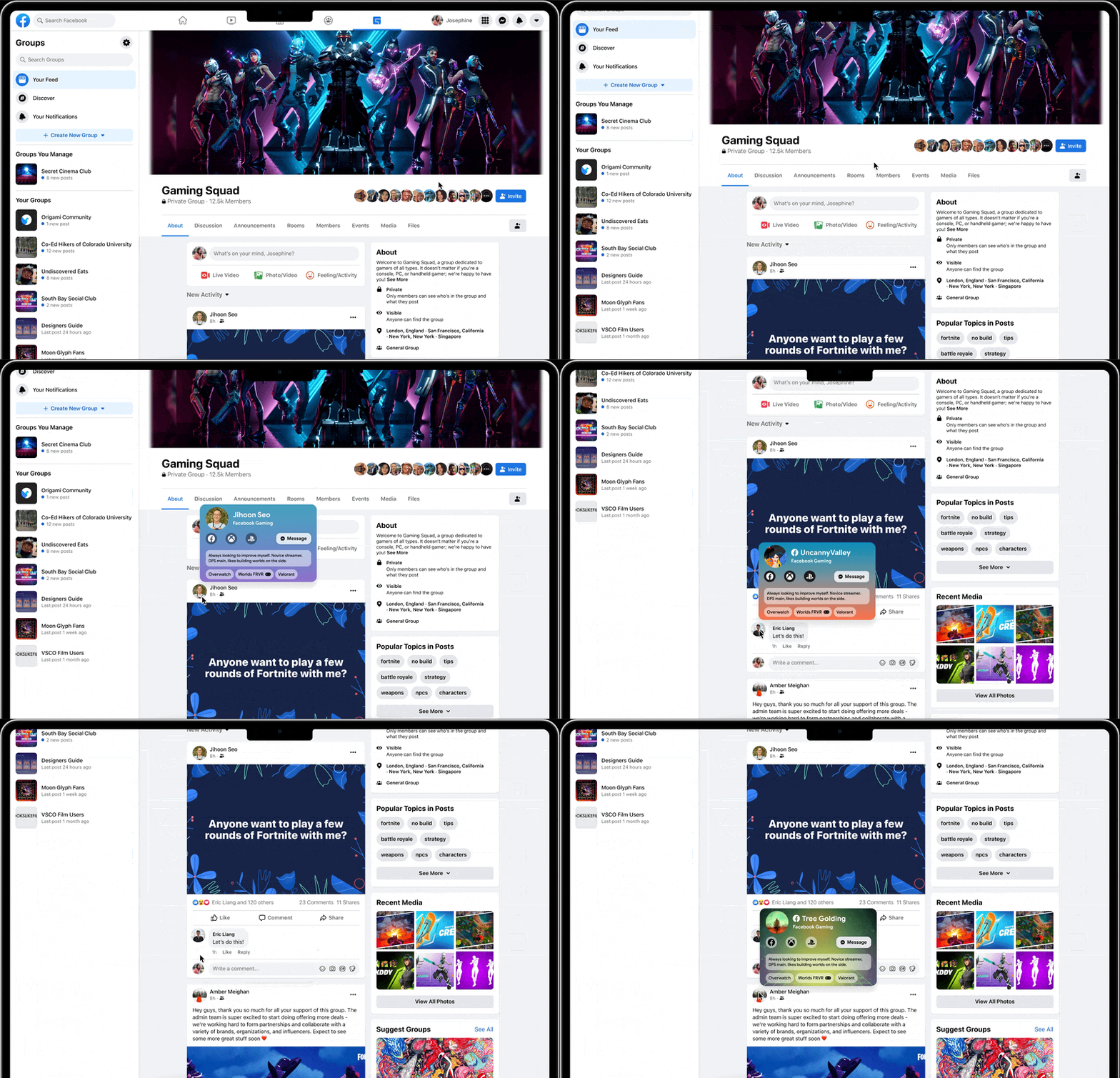
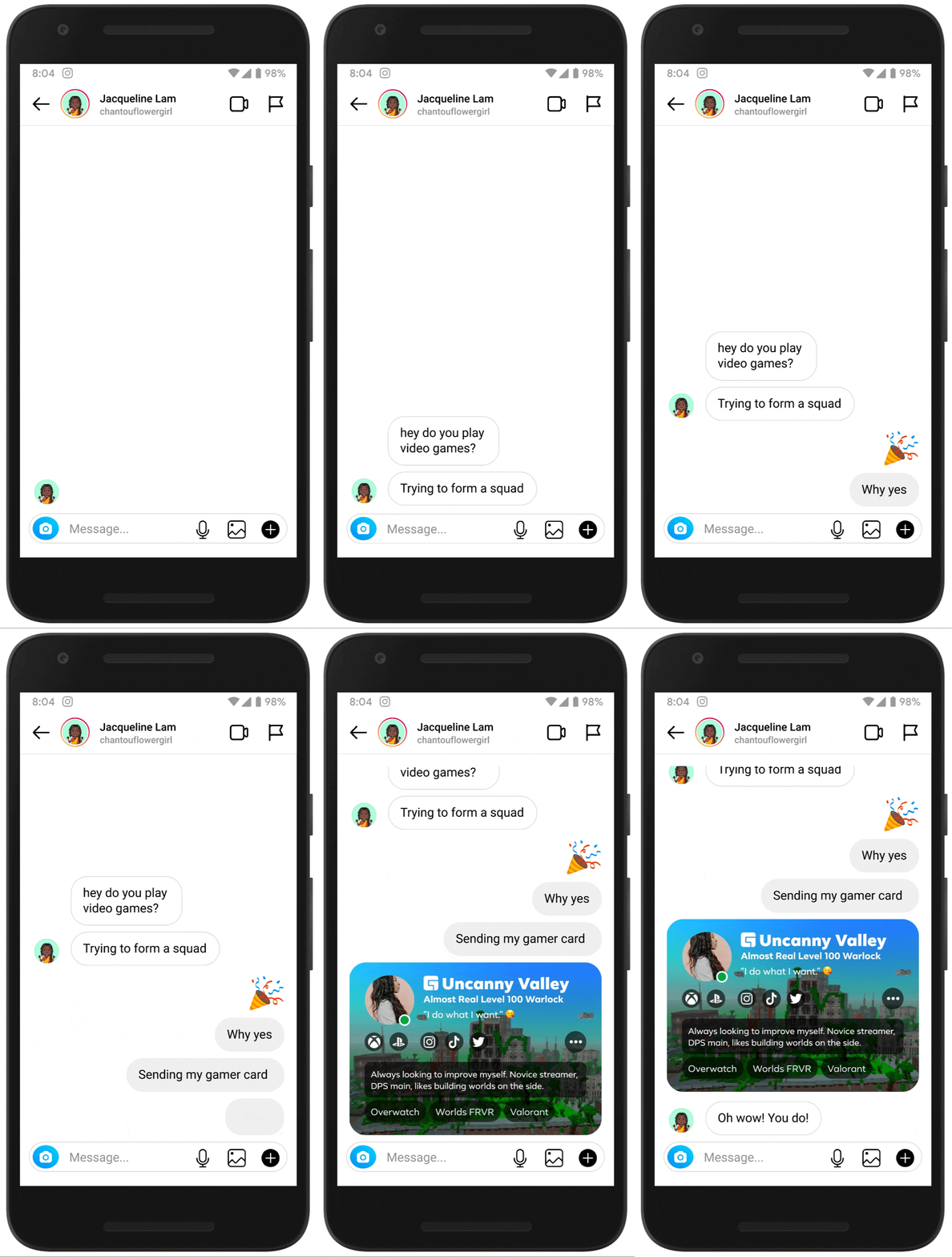
The internal impact of the player card project was personally significant as well: not long after, I was recruited to the Play team, the main revenue driver of Facebook Gaming, and was tasked with the design direction of its web platform.